
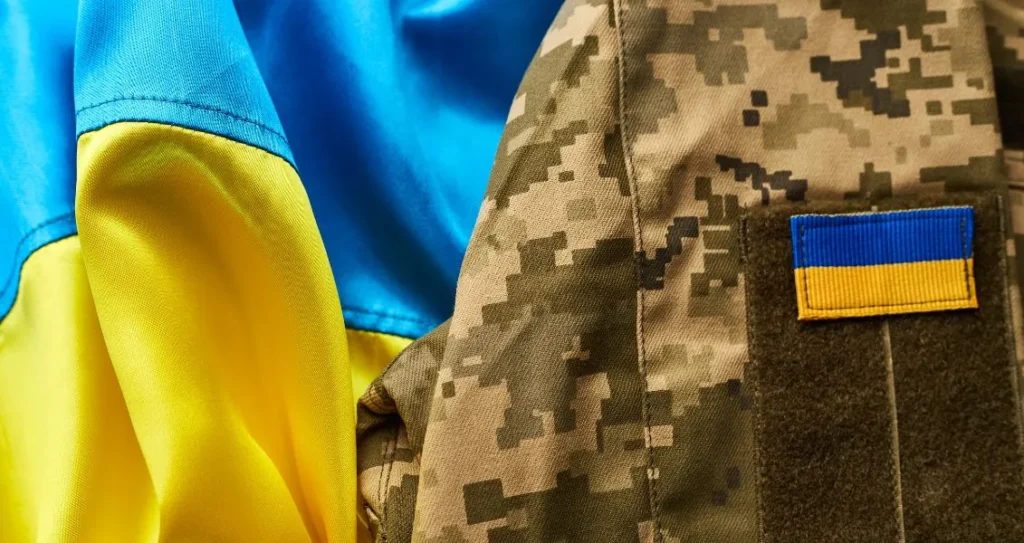
Ukraine will celebrate Defenders' Day on October 1. This holiday was introduced in 2014 to honor the courage and heroism of defenders of the independence and territorial integrity of Ukraine, the military traditions and victories of the Ukrainian people, and to promote the further strengthening of the patriotic spirit in society.
In Ukrainian tradition, this holiday is associated with the Day of the Protection of the Most Holy Theotokos. Therefore, in 2023, Defenders' Day has been moved from the 14th to
October 1 in connection with the transition of the Orthodox Church of Ukraine and the Ukrainian Greek Catholic Church to the New Julian calendar style.
The idea of the intercession of the Mother of God – a protector from enemies – has deep roots. The Most Holy Theotokos were highly revered by the Cossacks, and the Intercession was one of their greatest holidays, for which it received its second name – the Cossack Intercession. Cossack traditions are preserved and developed by modern defenders of Ukraine.
The Ukrainian Institute of National Remembrance has prepared thematic information materials for the Day of Defenders.
Defenders' Day is, first and foremost, a celebration of those thanks to whom we maintain our independence and are able to live our daily lives - to work, create, relax, and raise children.
On this day, we honor the modern defenders of Ukraine and Ukrainian heroes of different eras. Modern warriors multiply and develop the thousand-year-old Ukrainian military traditions. We thank everyone who defends our independence and we must remember everyone who gave their lives for Ukraine.
This holiday is another opportunity to thank the Defense Forces of Ukraine. Our gratitude is not something abstract and impersonal, because each of us has relatives, friends, and colleagues who stand in defense of our country and freedom.
We must provide our army with a strong rear - each in their own way, but with maximum dedication, so that it strengthens our defenders and brings victory closer.
The Ukrainian army preserves the names of heroes of past eras – from Rus“ warriors and Cossacks to Sich riflemen, soldiers of the UNR army, UPA and soldiers of the armies of the anti-Hitler coalition during World War II. The continuity of generations was also reflected in the elements of uniforms – the ”mazepinka“ headdress, the sleeve trident. The slogan ”Glory to Ukraine! – Glory to the heroes!” became the official greeting of the Ukrainian army.
War shapes and tempers the Ukrainian nation. Through victory, ingenuity, and selflessness, the current defenders have earned the highest level of trust among Ukrainians. This earns us respect in the world. We believe that the current defenders will win.
Historical background
On October 1, Ukrainians celebrate the feast of the Protection of the Most Holy Theotokos. The idea of the intercession of the Mother of God – a protector from enemies – has deep roots from the times of Rus and the introduction of Christianity in 988. Prince Yaroslav the Wise built a church at the Golden Gates in Kyiv as an expression of gratitude to God and the Most Holy Theotokos.
The Feast of the Protection of the Most Holy Theotokos was one of the most important holidays of the Cossacks, for which it received its second name - Cossack Protection. It was on the Feast of the Protection that the Cossacks held councils at which they elected a new hetman or members of the elders.
At the same time, a new type of icon emerged – “Cossack Intercession”, where Ukrainian hierarchs, hetmans and Cossacks are depicted under the omophorion of the Virgin. The Cossacks“ veneration of the Intercession also affected the toponymy of their territory of residence – today many villages in Ukraine are named ”Pokrovka“, ”Pokrovske“, ”Novopokrovka”.
During the Ukrainian Revolution of 1917–1921, the traditions of the military-Cossack community were revived. They became the basis for the development of the armed forces of the UNR, the Ukrainian State and the ZUNR. First of all, this is traced in the names of military formations. The first such unit was the Ukrainian Cossack Regiment named after Bohdan Khmelnytsky, created in May 1917. Later, formations appeared, named after prominent Cossack commanders - Petro Doroshenko, Maksym Zaliznyak, Kostya Hordienko, Ivan Mazepa. The Cossack “imprint” is also found in the following names: Sich Riflemen, Zaporizhzhia Group, Serdyut Division, Zaporizhzhia Sich, Haidamak Regiments and Free Cossacks.
Cossack military traditions during the Ukrainian Revolution are also traced in military symbols (flags, insignia), names of military equipment (armored trains “Khortytsia”, “Zaporozhets”, “Polubotok” and others), names of ships (cruiser “Hetman Ivan Mazepa”, gunboat “Zaporozhets”). Separately, it is worth mentioning the military terminology used to designate ranks, positions and military structural elements: Cossack, swarm, four-man, bunchuzhny, half-sotenny, sotnik, kurinny, osavul, colonel, brigade ataman, division ataman, corps ataman. This was reflected in the uniforms and appearance of soldiers of Ukrainian military formations of those times. Cap-“mazepinka”, black hats with colored braids, Circassians and other elements of ancient Ukrainian military clothing. Often, fighters, following the example of the Cossacks, shaved their heads, leaving only a herring.
In World War II, Ukrainians fought against Nazism in the ranks of the Red Army, the Ukrainian Insurgent Army, and the United Nations armies. Natives of different parts of Ukraine and Ukrainians from around the world, who were in the regular armies or became partisans, served in auxiliary formations or on the front lines, went through the entire war or died in battle, fought shoulder to shoulder with other peoples against Nazism. The soldiers of the Ukrainian Insurgent Army took up arms to protect Ukrainians from both totalitarian regimes - Nazi and communist. They fought for the restoration of Ukrainian statehood, following Cossack military traditions. The symbolic day of its creation is October 14, 1942, which then fell on the Protection of the Most Holy Theotokos. The UPA's struggle was a continuation of the Ukrainian liberation movement of the Ukrainian Revolution of 1917–1921, the underground Ukrainian Military Organization and the Organization of Ukrainian Nationalists in the 1920s–1930s.
Today, our army has become one of the most combat-ready armies in Europe, with 10 years of combat experience behind it. Already during the Russian-Ukrainian war, Ukraine reformed and modernized the Armed Forces according to the latest standards, and also restored specifically Ukrainian military traditions, and strengthened the ideological component of patriotic education of personnel.
In battles with units of the Russian regular army, our army has become professional and has become one of the most important institutions of the country. Today, Ukrainian society trusts the armed forces the most.
Modern armed forces have inherited from previous generations a headdress, insignia, and slogan.
“Mazepynka” is a headdress with a front wedge-shaped cut, part of the Ukrainian military uniform. It stylizedly imitates the appearance of Cossack headdresses of the second half of the 17th century, when Ivan Mazepa was the hetman. This is how they were depicted in portraits of that time. “Mazepynka” began to be worn by the Ukrainian Sich Riflemen during the First World War. Later, this headdress became widespread in other Ukrainian formations – the Galician Army, the Carpathian Sich, and the UPA. Since 2017, “mazepynka” has been the official headdress of the Armed Forces of Ukraine.
The sleeve trident is a badge of distinction worn on the sleeves of uniforms by soldiers of the UNR Army and Chief Ataman Symon Petlyura himself. “The trident is made of cloth, the colors are according to the types of weapons, the shapes are according to the drawing,” the order of July 30, 1919 stated. A simple, without details, trident was easy to make in conditions of continuous fighting and a small and unstable rear of the UNR Army. Continuing Petlyura’s traditions, modern defenders of Ukraine wear tridents on the sleeves of their uniforms.
“Glory to Ukraine! – Glory to the Heroes!” is the slogan of the Ukrainian Insurgent Army. It is now an official greeting in the Armed Forces of Ukraine. “Glory to Ukraine!” was the greeting of the soldiers of the cavalry division of the 1st Zaporizhzhia Regiment of the UNR Army. To this they responded: “Glory to the Cossacks!” The appeal “Glory to Ukraine! – Glory to the Heroes!” was approved in the spring of 1941 by the II Great Assembly of the OUN led by Stepan Bandera. On October 4, 2018, the Verkhovna Rada approved the greeting “Glory to Ukraine! – Glory to the Heroes!” as official in the Armed Forces and the National Police.
Thematic resources and materials of the Institute
Interactive map of the full-scale Russian invasion of Ukraine. Systematizes information about the course of the Russian-Ukrainian war after the full-scale Russian invasion of Ukraine and its consequences in the regional dimension. The resource was created and is filled by a team of specialists from the Ukrainian Women's Guard and the Ukrainian Institute of National Remembrance, available at vocation.
Methodological recommendations for local communities on remembering participants, victims and events of the Russian-Ukrainian war (http://surl.li/fwyxbu) - materials developed by the Ukrainian Institute of National Remembrance, the National Museum of the Revolution of Dignity, the National Museum of the History of Ukraine in World War II together with partners: the Center for Research on Military History of the Armed Forces of Ukraine, the Department of Culture and Tourism of the Kyiv Regional State Administration, the Platform for Culture of Memory "Past/Future/Art", the public organization "Museum of Contemporary Art", the platform for memory "Memorial", the Foundation "Partnership for a Strong Ukraine", can serve as a roadmap for authorities and communities in matters of memorialization and commemoration of participants, victims and events of the Russian-Ukrainian war.
Exhibitions:
«"10 Years of Aggression - 10 Years of Resistance" - about various aspects of the Russian-Ukrainian war: crimes, destruction, environmental disasters, public resistance, sea and air aggression, international consolidation, lost property, crimes against the media and others: http://surl.li/jgqbzk
«"Our Mariupol" - 15 banners using historical photos, illustrations, and short texts tell the history of Mariupol from the Cossack era to the resistance and destruction of the city as a result of the Russian full-scale invasion in 2022: http://surl.li/yaxnch
«"Ukraine. War in Europe"» – about the historical background of the modern Russian-Ukrainian confrontation, various aspects of the current phase of the war after the full-scale invasion of February 24, 2022, as well as the heroic resistance of the Ukrainian people, which keeps Ukraine in the focus of European interest http://surl.li/avoaak
«"Each of us is a warrior"» – a joint project of the Territorial Defense Forces of the Armed Forces of Ukraine and the Ukrainian Institute of National Remembrance on the historical continuity of the national resistance of Ukrainians, as well as on modern defenders of Ukraine - territorial defense fighters http://surl.li/hmpvmp
«"Racism is..."» created jointly by the Ukrainian Institute of National Remembrance, the Center for Strategic Communications and Information Security, as well as the National Memorial Complex of the Heroes of the Heavenly Hundred - the Museum of the Revolution of Dignity. Reveals the content and characteristic features of quasi-ideology - racism: the cult of "scrap" and the cult of the leader, imperial revanchism and "victory", aggressive propaganda and xenophobia, tells about the crimes committed by racism http://surl.li/dmroit
«"Communism = Racism"» created by the Archive of National Remembrance (Branch State Archive of the Ukrainian Institute of National Remembrance). Includes 13 stories of Ukrainians of the 20th and 21st centuries who suffered from the Soviet and modern Russian authorities. The stories draw a parallel between the crimes of communism and racism and prove that the methods and motives of the Russians for the destruction of Ukrainians - executions, evictions, robberies, deportations, filtration camps - do not change http://surl.li/mtmtmn
«Ukrainian Army: 1917–1921» tells about the beginnings of the Ukrainian Army and its organization, legendary commanders, branches of the army, uniforms and insignia, weapons, the most prominent military formations and combat operations of 1917-1921, commemoration and restoration of military traditions today http://surl.li/lzfdjq
«Against Goliath» tells the story of the women and men of the UPA who challenged two totalitarian regimes http://surl.li/ebgisb
«Л"Jude of Freedom"” – a large-scale video and exhibition project about the people who, with their work and struggle in the last century, made it possible to restore Ukraine's independence http://surl.li/phbmhb
«Ukraine's will or death» is dedicated to the anti-Bolshevik insurgent movement, which in 1919–1920 covered almost all regions of Ukraine, introduces the atamans of the largest insurgent units, methods of struggle, as well as the so-called insurgent “republics” http://surl.li/sfkihf
Cry:
«Warriors. History of the Ukrainian Army»: http://surl.li/pjyaaz
Art posters "Military Elite of the Ukrainian Revolution of 1917-1921" are 22 posters depicting legendary foremen who stood at the origins of the Ukrainian army: Yevhen Konovalets, Petro Bolbochan, Oleksandr Udovichenko, Dmytro Vitovsky, Petro Franko and others: http://surl.li/oiekol http://surl.li/wrqlvj
Infographic "Why Ukrainians and Russians are not historically "brotherly peoples""«. The project of the Ministry of Culture and Information Policy and the Ukrainian Institute of National Remembrance contains 9 banners. For example, Ukraine and Russia developed under different historical conditions, were influenced by different neighbors; Ukraine is not a "younger brother"; Ukraine is a European country http://surl.li/oqelmx
Columns on the Institute's pages on social networks (Facebook, Twitter, Instagram, Telegram channel "History and Memory"): "Heroic Stories of the Russian-Ukrainian War" (#fightforukraine), "Russia Kills" (#росия_вбивающе), "Russia Destroys Ukrainian Cultural Heritage" (#russiaruinsculture), "Lost Childhood.".
«Patrons of Our Streets» – 20 double-sided flyers that reveal eras through biographies of prominent figures, their contribution to Ukrainian state, military, and cultural construction. The project is aimed at popularizing new street names – distribution through mailboxes or street boxes, design in banner exhibitions, use in educational institutions, museums, community libraries, and at open events. The flyers are supplemented with methodological recommendations with application options: http://surl.li/bpnayb
Educational project of 2020 «"Dialogues about war"» – four 10-minute video conversations between a student and veterans of the modern Russian-Ukrainian war on the topics: «What is war?», «Why does Russia seek to seize Ukraine?», «What is the modern Russian-Ukrainian war?», «Full-scale invasion,» as well as methodological recommendations http://surl.li/pvlqja
Episode of the podcast (In)Memory «Tea in bags, memorial traditions, mobilization. The unknown legacy of the First World War» with Ivan Stychinsky: http://surl.li/gkznhn
Historical carousels (the list of materials is not exhaustive, in addition, they are regularly posted on the Telegram channel of the Institute "History and Memory" @uinp_gov):
«"UGVR-80. Five facts about the "rebel parliament"" – https://t.me/uinp_gov/1864
«7 Ukrainian Artifacts and Phenomena of the First World War» – https://t.me/uinp_gov/1918
«"Kengir Uprising. Free even in captivity" – https://t.me/uinp_gov/1719
«"April 14 - the beginning of the anti-terrorist operation" - https://t.me/uinp_gov/165
«"Moscow has sunk. How the Ukrainian Navy controls the sea without using warships" – https://t.me/uinp_gov/1639
«"10 years of the feat of the 10th Saky Naval Aviation Brigade named after the Hero of Ukraine Colonel Igor Bedzai" – https://t.me/uinp_gov/1616
Video materials:
«"Heroes of Ukraine. South" - an interview with servicemen awarded the title of Hero of Ukraine with the Order of the Gold Star, Oleg Fedorov, Mykola Chobanu, Denis Chubarev. This is a joint project of the TV company "Public. Odesa", the First Interregional Department of the UINP, the Operational Command "South" of the Land Forces of the Armed Forces of Ukraine, and the NGO Veterans HUB ODESA: http://surl.li/nxyxbc
«"Cossack Roots of Donetsk and Luhansk Regions" is a short film-reminder about the Cossack history of the region and that now, in a fierce struggle with Russian encroachments, we are defending and reclaiming ours: http://surl.li/ahcvts
«Fire and Art: The Saga of Heroes» is a series of videos about military personnel who are compared to iconic Ukrainian artists, including Lesya Ukraina and Ivan Franko. The project was created by the First Interregional Department of the Ukrainian Institute of Art History, the Operational Command «South», the NGO «Veterans HUB Odesa» and the «Center for the Development of Contemporary Culture»: http://surl.li/nyqafu
«Voices of the Revolution of Dignity» – video testimonies of participants in the events of November 2013–February 2014 – http://surl.li/sewpjy
«"Voices of the UPA" - memories of those who fought for the independence of Ukraine with weapons in their hands, collected by the Center for Research on the Liberation Movement and transferred to the Oral History Archive of the UINP: http://surl.li/avnmnq
The cycle "Unconquered"« – three short videos in which the descendants of the soldiers of the Ukrainian Insurgent Army talk about their descendants, who are currently on the front lines defending Ukraine from Russian aggression http://surl.li/ungqpw
Video lectures «The combat path of the UNR Army»: commanders, military units, key operations. A series of thirty-minute video lectures: “Structure and formations of the UNR Army”, “Key military operations of the UNR Army”, “Outstanding commanders of the UNR Army” http://surl.li/nsiwnc
Documentary series about political prisoners – a joint project of the Ukrainian Institute of National Remembrance and "Historical Truth". A series of short films about Iryna Stasiv-Kalynets, Mykola Rudenko, Svyatoslav Karavansky, Ivan Dziuba, Mykhailyna Kotsiubynska, Nadiya Svitlychna: http://surl.li/ohjwtm
«"People of the Epoch" is a series of biographical videos dedicated to the anniversaries of famous historical figures who left a noticeable mark on the history of Ukraine. The heroes of the series are Prince of Kyiv Yaroslav the Wise, Hetman Ivan Mazepa, writer and member of the Central Rada Lyudmila Starytska-Chernyakhivska, dissident Yevhen Sverstyuk, creator of the Ukrainian army, Chief Ataman of the Active Army of the UNR Symon Petliura, author of the words of the National Anthem of Ukraine Pavlo Chubynskyi and others: http://surl.li/kqgagd
Video story «The Ukrainian Revolution of 1917–1921. How the State Was Created» http://surl.li/beusjr
Video story «What did the Ukrainian Insurgent Army fight for?» http://surl.li/ztxeza
Video lectures on the history of Ukraine for military personnel in the regions http://surl.li/xsqhip
Series of short documentaries «"Women who died for Ukraine"» is a project of the Women's Veterans Movement with the support of the Institute http://surl.li/fbmagd
«"History of war sites"» – video recording of the memories of people who survived the occupation and witnessed war crimes http://surl.li/gtwaba
A series of banners about the first year of the war (photos used in the series: Ministry of Defense of Ukraine, General Staff of the Armed Forces of Ukraine, Timothy Fadek, Christopher Occhicone, Dan Kitwood, Viktor Borynets, Salwan Georges, Thomas Peter, Hlib Garanych, REUTERS) http://surl.li/rzkjon
Institute publications:
Brochure "2014: The Beginning of the Russian-Ukrainian War"« – a project based on the Institute’s information materials for the 5th anniversary of the beginning of the Russian Federation’s armed aggression against Ukraine. Contains two narrative directions: the historical context and prerequisites of the Russian aggression of 2014; the chronology of the beginning of the Russian-Ukrainian war, from the occupation of Crimea to the signing of the Minsk Agreement http://surl.li/amsobx
«"No rotation": http://surl.li/xyhqvw
«"Warriors of the Dnieper: values, motivations, meanings"» http://surl.li/bqfzoh
«"Girls cut their braids"». A book about women in war http://surl.li/lopuip
«"Volunteers: The Power of the Caregivers"» http://surl.li/onfbhs
«"Chaplains. In the service of God and Ukraine"» http://surl.li/hefqau
«"People of the "gray zone": witnesses to the Russian annexation of Crimea in 2014"« http://surl.li/sakfxk
Tests:
«"For me, the trial of history has already begun": to the 145th anniversary of the birth of Symon Petliura - http://surl.li/wywdvp
«Would you be cast in a film about the November Revolution?» – http://surl.li/anbzcl
«"Who are you from the Military Elite of the Ukrainian Revolution of 1917-1921?" - http://surl.li/ebbrsc
The materials were worked on by employees of the Ukrainian Institute of National Remembrance: Olena Okhrimchuk, Hanna Baykenich.
